Sunday, February 3, 2019

Week 5 - Samantha Soleta

Known to excel in design and furniture manufacturing, Denmark has made a name for itself in the creation of furniture design across the world. Designing a product that has the same function no matter the region, furniture design has become a dependable key product of the nation. Per H. Hansen's Networks, Narratives, and New Markets: The Rise and Decline of Danish Design notes the many reasons that Danish furniture has flourished into becoming the staple and frontrunner for furniture design. Confronting design by bringing their products to the bare minimum, Danish designers were able to have their modern furniture "sell itself" because "it possessed the essential characteristics of beauty, simplicity, and functionality." (450) Holding its position as the design leader of the world, Denmark was celebrated as the source of craftsmanship and sleek and classic design. With Danish Modern being a simplistic and minimalist style known across the world, Denmark's industry began to rise and thus set the standard for what modern design came to be. 
Image result for Arne Jacobsen

The shift into postmodern design, however, had created a shift away from Danish modern design and into new postwar aesthetics. The need for newer metal and synthetic materials was a rapid shift away from what Danish designers had typically used and thus left them to fall behind in furniture design. It's interesting to see how this lasting impact has translated into modern design today. While many of the styles and aesthetics of Danish design live on, the world no longer looks to them as a leader in furniture design. Remembering the designs of the Eames or Le Corbusier, Danish design can sometimes be lost in the shadows.

Hansen, Per H. Networks, Narratives, and New Markets: The Rise and Decline of Danish Modern
        Furniture Design, 1930-1970. The President and Fellows of Harvard College.

https://www.barcelona-designs.com/blogs/news/arne-jacobsen-a-man-with-no-philosophy
modern
furniture
was
able
to
"sell
itself,"
in
a
sense,
because
it
possessed
the essential
charac
teristics
of
beauty,
simplicity,
and
functionality.

Week 1 - Diane Tran

From this reading, I learned that there are three things that create a successful startup.
Paul Graham describes the three components that start a successful startup, “to start with 
good people, to make something customers actually want, and to spend as little money
as possible.”


Image result for how to start a startup
To start a startup with good people means who you hire. The people who you hire can
determine the outcome of the companies’ success. Not only you should hire people who
are qualified for the job, passionate for the job, but also people who go above and
beyond.
Each person should have a certain role or job within the team and aim for goals for the startup.
Secondly, Paul Graham emphasizes to make a product that is desirable among the population.
We must be able to conduct a product that is appealing to companies because if not then it would
not be profitable. To have a successful startup, the team must adapt to figure how to make the
product more desirable. Finally, for a startup that is just starting out, saving money is key. By
saving money, we can make more money to include anything that is needed within the startup
itself or for the employees or product itself.
Taking these tips and applying it to my own startup, this allows me to have a good foundation
for building a startup. These ideas let us see what consumers look for and the needs that lie
to help prosper a nation.

Graham, Paul. How to Start a Startup.

Graham, Paul. Startup = Growth.


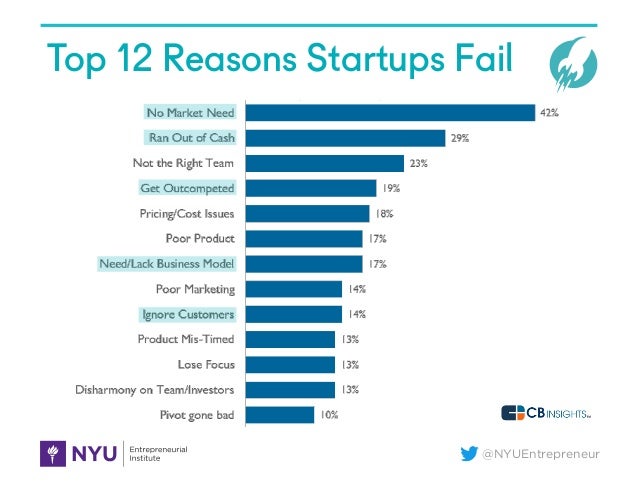
How to Startup. Google Search. https://www.slideshare.net/NYUEntrepreneur/how-to-start-a-startup-at-nyu: Accessed 3 Feb. 2019.

Week 3 - Alvin Du

Colbert's liberal approaches towards government reorganization seem very contradictory since his efforts led to the end of outdated feudal rights and privileges, but at the same time his administration represents an authoritarian system. I would imagine that his approaches were highly favored by officials and merchants, but not as much by the masses. The fact that most of Colbert's policies were not original makes me wonder how others before him attempted to implement these policies and why their efforts were ineffective. I'm not sure how an absolute monarchy addresses the problem of religious difference since people will still hold on to the word of their god or higher deity regardless of having a King in rule. Colbert's reforms are describes based on collectivism and individualism. There seems to be emphasis on the achievements of the individual and not just efforts that benefit the nation as a whole. I can admire Colbert's emphasis on fine arts to preserve French artwork, styles, and keep them evolving. There seems to be not as much of an emphasis of the Academy of Sciences in 1666, but there was effort. I think that Colbert's contributes to France's national aesthetic by implementing reforms that shape the society into what it is today. France is not defined by just its food or its fashion, but by its political influence and government structure. Getting to this point has not been an easy feat and took longer anticipated but Colbert successfully carried out his administration.


Colbert and Governmental Control of Industry in Seventeenth Century France. (n.d.). The MIT Press. Retrieved February 4, 2019.

Week 5_Toan Tran


Denmark, a country known for its Danish furniture, has branded itself in this manner as a part of the industry they intended to enter. Stated in Networks, Narratives, and New Markets: The Rise and Decline of Danish Modern Furniture Design, 1930-1970, some people believe that the reason Danish furniture is so popular in both the United States and Denmark is due to its beautiful design. But of course, as we know now, their popularity is also because of how this industry of the country itself worked alongside its government and people to reach where it is today. In fact, the author agrees that it is because of the “concerted efforts of a social network to assign certain meanings to concepts like ‘Danish Modern’ and ‘Danish Design’” (Hansen, 449-450). They speak about a narrative, a frame that has shaped the way that Danish furniture is viewed and built to the status it holds today. Kaare Klint, a professor and head of a Furniture School, contributed to this narrative with his scientific design where he emphasized on function and not form. Then there were the cabinetmakers, who completed this narrative with their craftsmanship. As for marketing, the Danish Society of Arts and Craft, the Cabinetmakers’ Guild Furniture Exhibitions, and Den Permanente all helped in creating this network for Danish furniture to thrive. Now, Denmark's influence is all across the world in people's office, homes, and continues to affect people's lives to this day. 

Denmark Furniture Design Captivating Design Hans J Wegner Danish Furniture Designer

References:


Denmark Furniture Design Captivating Design Hans J Wegner Danish Furniture Designer - Erinnsbeauty.Com. http://erinnsbeauty.com/denmark-furniture-design.html/denmark-furniture-design-captivating-design-hans-j-wegner-danish-furniture-designer. Accessed 4 Feb. 2019.
Hansen, Per H. Networks, Narratives, and New Markets: The Rise and Decline of Danish Modern Furniture Design, 1930-1970. The President and Fellows of Harvard College.


Week 5-Uyen Ngo

When you walk into most American homes, they are embellished by clean modern furniture, furniture that came from IKEA. How could Americans not love IKEA furniture? Not only is the trip to an IKEA fun and filled with delicious meatballs, but IKEA furniture is high quality, sleek, and most importantly, affordable. In the article "Internalization of Danish Furniture", it is explained to us that "an important part of the explanation behind the increasing export of furniture was that Danish furniture companies already in the 1970s invested in efficient production facilities, which made Denmark very cost competitive" (Hedemann, Nissen 17). A connection that I found to the class was the concept of the people. A large part of the success is due to the words of influential Danish architects, who established Danish furniture as "high quality craftsmanship and design". 
The Danish are interesting in that their national branding is based on something as specific as furniture. Usually a nation brands or rebrands itself based on something more general, like food or fashion. When it comes to my project, I will follow their example in hopefully thinking outside the box, and looking at more specific areas instead of just a general big picture approach. 

Works Cited
Hedemann, L., & Nissen, M. (1). The internationalization of Danish furniture. A value chain perspective. Erhvervshistorisk Ã…rbog62(2), 15-36. Hentet fra https://tidsskrift.dk/eaa/article/view/15649

Week 2 - Alvin Du

I have some sort of clarity on what national aesthetic is after reading Birth of Korean Cool. It's interesting to see how the government, industries and people influence each other to change a country's core values. The article states that in 2009, the music industry was losing money due to illegal downloads of music. Subsequently, the government stepped in by charging all karaoke rooms a royalty to ensure that the music industries survive. I didn't realize such unity existed when it came to the government and industries. I always thought it was only limited to check and balance or import and export. Furthermore, I had always believed the popular Korean artist Psy had made most of his songs for sheer silliness. Rather, he uses satire in his acclaimed song "Gangnam Style". I'll be sure to closely read the lyrics this time. One thing I am unclear about is what the author of Birth of Korean Cool meant by irony and how it really relates to the evolution of old Korea to new Korea. A similarity I see with Korea's transition in culture heavy reflects that of the Japanese. Instead of relying on products to influence the people, Korea and Japan seemed to have both sought for change internally.


Hong, E. (2014). The Birth of Korean Cool: How one nation is conquering the world through pop culture. London: Simon et Schuster.


Week 1 - Alvin Du

There are multitudes of recent startups within the last couple years. Ranging from Lyft to Quip, they all have a target market. What they have in common is that they are oriented around consumerism. Along with the three pillars that Graham stated in which a startup succeeds, I believe an additional important factor that closely works in tandem with people should be sales. To further clarify, if we look at technology and its perpetual growth, we can see that technology is always evolving around people's needs and convenience. Taking IBM as an example, they have many departments dedicated to sales. They are always competing with multiple corporates in selling their software and technology that other companies have with the same function. So what makes IBM's technology better? Possibly nothing, but it is how IBM is able turn the tide and convince corporates to use their technology rather than a competitors. Lets look at another staple in technology: Apple. Apple is well known for their production of cell phones, computers and accessories. However, when it comes to their products, one can't explicitly state that apple products are superior than products within the same specifications. In spite of this, Apple has customers who swear by their products. This isn't because that Apple's products are far superior than Samsung, LG, Google or Microsoft. It is partially due to Apple's ingenious methods of sale.   

http://www.paulgraham.com/start.html http://www.paulgraham.com/growth.html