Friday, March 22, 2019

Week 6 - Percy Yan

According to Branding a Rising China: An Analysis of Beijing's National Image Management in the Age of China's Rise by Sheng Ding, she mentions that national image is not only a channel to wield a state's national power, but also an important national power resource. It has become critically important for China as it tries to rise in a relatively favorable international environment. This article also examines China's strengths and weaknesses in its national image management. On the one hand, China's national image benefits from its strong commitment to cultural diplomacy, effective employment of information and communication technologies in international broadcating, and close connections with the Chinese diaspora around the world. On the other hand, China's national image management is constrained by such hurdles as weak political credibility, reviving popular nationalism, and various missteps in its foreign policies.
There are many severe problems with China though, such as pollution, food safety, transparency, credibility, consumer consciousness… No country is ever perfect. There is major pollution in the United States; food safety is an issue across Asia, transparency and credibility of a government is not promised in any country; consumer consciousness has a deeper root with influence around the world. However, often times China is put to the spotlight for critiques around the world. Just like the article Media, the Olympics and the Search for the “Real China” written by Kevin Latham describes, no one cares about the eagerness of China trying to prove what we are really about, our growth, our economy and new technology, all they see is air pollution, fakeness, and government control. It’s kind of heartbreaking to see my country going through such tremendous development after world war 2 is still being misunderstood. This article shows China's national image management will remain an uphill battle in the long run.

Week 4 - Percy Yan

In the article "How American Style Fueled Postwar Youth Fashion in Japan" by Chantal Fernandez, she talks about the post World War II Japan. Kensuke Ishizu started a men's ready to wear company called Van Jacket to provide a functional uniform for the emerging middle class - men who were not yet accustomed to thinking about fashion. She also talks about the fact that this generation would always favor tailor made clothing over off the rack styles, he turned his attention towards the next generation. During a world tour in 1959, Ishizu visited Princeton realized that the preppy style of the dapper young students was perfect for Japanese youth. She also told us that in Japan, if you pick up Popeye or Men's Non-no or whatever, it's fashion. Since the internet is very big but mainstream media has not moved over to the Internet, Japan is using print culture for their fashion.


Week 10 - Percy Yan

In the article Startup Vietnam by Andrew Rowan, he talks about Vietnam and how it has created and experienced a remarkable growth and development in the last 30 years. This book also captures the challenges, efforts, and successes of Vietnam’s youth, local startups, and foreign entrepreneurs during a time of transition between tradition and
modernity. Having significantly evolved during the last 20 years, Hanoi's leadership is committed to making Vietnam a “startup nation” in an attempt to accelerate the country’s growth over the next 20 years. The spirit and promise of a resilient, improvisational, driven, and entrepreneurial people in this Southeast Asian nation are presented within an understandable operational landscape, in addition to creating a vision for what a 21st century Vietnam might become. We also learn that Vietnam doesn’t have a market of over a billion people like China or India. Yet, with a population of over 90 million people, it has more than 1,500 active startups, making Vietnam the third largest entrepreneurial ecosystem in Southeast Asia (behind Singapore, the major financial hub in the region, and Indonesia with 240+ million people, respectively). The World Bank and the IMF have both recognized Vietnam’s development success. In 2013, the World Bank acknowledged Vietnam’s path from one of the world’s poorest countries to a lower middle-income country in the span of 25 years. Last year, Christine Lagarde, Managing Director of IMF, delivered remarks in Hanoi about Vietnam “gearing up for the next transformation.” If Vietnam is able to avoid the middle-income trap, it can then provide a blueprint for similar countries. Furthermore, as a country among the first to be impacted by climate change, Vietnam will serve as a litmus test for how a rising sea level will impact countries around the world.

Week 10-Uyen Ngo

Last summer when I arrived in Vietnam after just one year after my last visit, Ho Chi Minh City seemed like a completely new city. Despite knowing that it was already becoming quite Westernized from my last visit, it seemed like in 365 short days, it developed exponentially. That meant there were some districts that looked as if they were a part of a first world country. But on the other hand, there were districts that were filled with broken down buildings. I remember sitting in a Starbucks near home to study and it was overfilled with people for the majority of hours of the day. It made me wondering why people did not think about investing in Vietnam. Because the competition would not be as abundance as in the West, especially with leisure companies such as food and clothes. 

Then when I read Andrew Rowan's book and when we had our discussion, it made sense. I think it is definitely a two sided story. As Rowan mentioned, it is important to do 5 things: learn the local language, local business culture, the history, the pulse of the city and country, and opportunities. These "tips" where mentioned because, as he says "the opportunity costs are real-there is a lack of both professionalism and mentors underlying many interactions" (Rowan, 236). As a so called "Viet Kieu", I have to agree with many of the criticism that he mentions. As a country, Vietnam has to accept its flaws and attempt to fix it to increase its chances of moving forward. That being said, I also hope that investors and entrepreneurs recognize that it takes some adapting but when it is done, they will be in a position of a business that has a plentiful of opportunity. As long as both sides swallow their pride, there will be a business opportunity of a lifetime waiting. But if Vietnam never allows itself to admit its mistakes, it will put a cap on its developmental potential. 
Works Cited
Rowan, Andrew. Startup Vietnam: Innovation and Entrepreneurship in the Socialist Republic. GKTA Group, 2018.

Week 10_Yueming Tan

First of all, this book made me know a new look at Vietnam. Vietnam is a country with more than 90 million people and more than 1,500 active startups. This complete overturn general misunderstanding that Vietnam is a poor developing country. Second, when people mention Vietnam, they will think of war. Vietnam’s rapid development now moves them from one of the poorest countries to low- and middle-income countries. Third, entrepreneurs now try to expand the size of their company but lack transparency and restrictions about the Internet. Fourth, due to the rapid economic development of Vietnam, many foreign entrepreneurs have put their eyes on Vietnam. But at the same time, the participation of foreign entrepreneurs will make Vietnam culturally impacted and contradictory.
On the other hand, this book mentions many interesting places in Vietnam. This makes me want to travel to Vietnam.


  • https://cdn.tourradar.com/s3/tour/original/95481_99a760be.jpg
  • Rowan, Andrew. Startup Vietnam: Innovation and Entrepreneurship in the Socialist Republic. GKTA Group, 2018.


Thursday, March 21, 2019

Week 10. Garcia, Moises

Start up Vietnam really spoke to me; when he mentioned that Vietnam first had to get rid of what it was known for, or for what the world saw Vietnam as. He went on to mention that the media portrays Vietnam in this form and that isn't really what Vietnam is, Vietnam is a place where people can share their ideas and create businesses from these ideas. The book talks about what it takes to go into the start up business. Vietnam has more than 1500 active start ups which is the 3rd largest entrepreneurial ecosystem in the world. I don't really want to speak on the book specifically but the message that he is trying to send, or at least the message that I am receiving from it. That is that a lot of these poorer countries automatically get seen as dangerous or the view of them just isn't to par to countries like the US or Europe. I am especially talking about countries like El Salvador to be more specific and connect with the die that he is trying to bring up; El Salvador as we all know is known for its gang worldwide because of news outlets, and even then you have to look it up to see what is going on. I like his idea of Vietnam wanting to be the start up capital of the world. He is able to be successful with his idea because he seeks help from all over like "governments of Vietnam, the United States, and Finland as well as private sector advocates (local and international investors, entrepreneurs, and developers) to further the development of the enterprise ecosystem".

Image result for startups in vietnam

Citations:
-Rowan, Andrew. Startup Vietnam: Innovation and Entrepreneurship in the Socialist Republic. GKTA Group, 2018.
-“Getting into Vietnam’s Startup Scene? Here’s 10 People You Should Meet.” Seedcom. Accessed March 21, 2019. https://seedcom.vn/blogs/seedcom-news/1000055319-getting-into-vietnam-s-startup-scene-here-s-10-people-you-should-meet.

Tuesday, March 19, 2019

Week 10 - Samantha Soleta

Andrew Rowan's Startup Vietnam: Innovation and Entrepreneurship in the Socialist Republic serves as almost a handbook to successfully navigating entrepreneurship in modern day Vietnam. In the first chapter of his book, Rowan uses lots of firsthand accounts to explain the current business environment in Vietnam and its growing economy. Vietnam is quoted to be "gearing up for the next transformation." As Vietnam has experienced rapid development over the past few decades, we see it moving up in the global economy and being one of the most entrepreneurial ecosystems in Southeast Asia at the moment. Ultimately, Rowan's main point of the book is to share how Vietnam is a prime location for startups to begin for all of its potential. However, he explains that when beginning to work in Vietnam, business owners must understand the kind of culture, environment, and hard work that is involved with creating a startup in Vietnam.

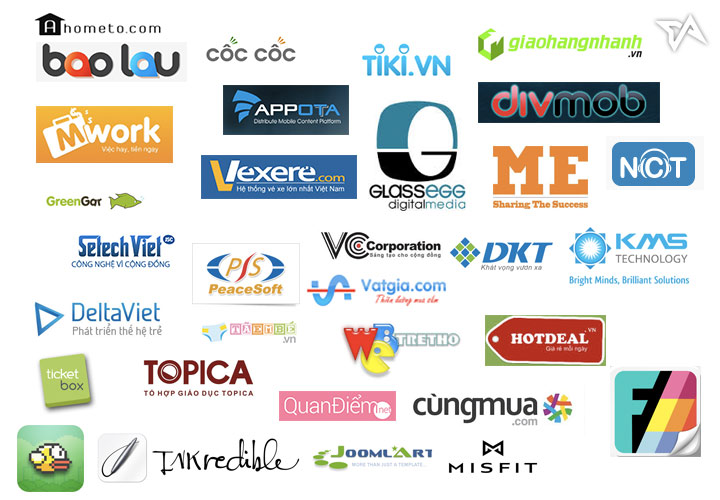
 Vietnam’s startup ecosystem over 5 years reviewed - ảnh 1

In my opinion, I think the book did seem quite repetitive yet still had a lot of valuable information as well as not-so-valuable but still interesting information. An example of this is his story of the "Great Rat Hunt" which occurred during French colonization. In fear of the bubonic plague, the French had Vietnamese hunters to search for and kill rats. Their wages would then be based on how many rats they killed. This story caught me off guard because I thought I was learning about entrepreneurship but then he explained the entrepreneurship of it. The hunters began to farm the rats in order to turn in their tails and receive compensation. Although it didn't quite align with modern day entrepreneurship in Vietnam, I thought this was a funny story to include.

Cited:

Rowan, Andrew. Startup Vietnam: Innovation and Entrepreneurship in the Socialist Republic. GKTA Group, 2018.

“Vietnam's Startup Ecosystem over 5 Years Reviewed.” THE VOICE OF VIETNAM, 26 Sept. 2017, vovworld.vn/en-US/news/vietnams-startup-ecosystem-over-5-years-reviewed-579272.vov.