Sunday, October 1, 2017

Week 1 - Riley Frederking


Remaking one’s self can be extremely challenging, remaking a nation that much more so. However, Germany has managed to do just that. Once shrouded with negative connotations and perceptions, Germany been able to surpass its old images and ghosts of the past, to become one of the leaders in Simon Anholt’s Nation Brands Index. Prior to 2006, Germany had managed to become known for their high-quality technology, engineers, and well-built cars (Treat). However, during the 2006 FIFA World cup, Germany was able to capitalize on their sportsmanship and prowess to show the kindlier, “fun-loving” side of their country (Treat). In addition, Germany has shown a softer side in recent years by opening its doors to millions of refugees and migrants, and in June, Germany became the 15th country to recognize same sex marriages (Eddy). In order for Germany to reach maximum “national aesthetics” status, I believe they could turn themselves into a tourism powerhouse and market the beauty of their country by emphasizing the museums and local attractions. However, it will be important for Germany to not “constrain [their] national identity within a commercial logic” which can lead to “commodification”, as if the identity of the nation is something to be bought and sold” (128 Kanera). The challenge moving forward, will be for Germany to maintain their index standing and expand it. For as Nadia Kanera points out, nation branding is “a long-term project” which must “inform policymaking and become implicit in the way the country is run” (124 Kanera).

Question: Which countries have lost their “national aesthetics” status recently and what were the causes leading up to it?

Eddy, Melissa. “Same-Sex Couples Wed in Germany as Marriage Law Takes Effect.” The New York Times, The New York Times, 1 Oct. 2017. Web. 1 Oct. 2017.
 “Germany Leads 2014 Nation Brands Index.” The Place Brand Observer, 30 Apr. 2016. Web. 1 Oct. 2017.
Kaneva, Nadia. "Nation Branding: Toward an Agenda for Critical Research." International Journal of Communication, vol. 5, 2011, pp. 117-141.
Lovelace, Steve. “Die Firmenländer von Deutschland: A German Brand Map.” Steve Lovelace. 25 May 2015. Digital Image. 29 Sept. 2017
“NBI.” Nation Brands Index, 24 Feb. 2017. 1 Oct. 2017.
Nock, Yannick. “What Germany Can And Can’t Do To Improve Its Image.” SZ International, 19 July 2015. Web. 29 Sept. 2017.
Treat, Isabelle. “Nation Branding ‘Made in Germany.’” Public and Cultural Diplomacy 6, 21 Mar. 2012. Web. 29 Sept. 2017.

Week 1 & 2- Kristina Ou

Week 1:
Nation Branding can alter how people perceive a country or nation by portraying images that they want their country to represent. For example, a country with positive nation branding is Japan with its rich culture and advancement in technology. Through their production of media as well, such as their pop culture, they have attracted a large amount of interest towards their country. They have also recently been chosen to host the 2020 Olympics which will also help with the popularity and nation branding of their country by bringing people from around the world to experience their culture and lifestyle. Nation branding can have a huge effect on the country, which also means that it can negatively impact a country. As we have mentioned in class, Japan used to be an unpopular place for tourists. The citizens of Japan would avoid tourists and talk down to them when they would try to interact with the people. When this information spread, many tourists would avoid going to Japan because they did not want to be mistreated especially when on vacation. Even though Japan has become more welcome with foreigners, the perception that Japan is not a desired place to visit is still there.

Question: How can a nation completely detach itself from a negative branding when it has affected the perspective of the country so extremely?


Week 2:
I think that the culture and heritage aspect of the National Aesthetic model has made a huge influence on the South Korean development. It has become so popular that the government is also positively promoting this media because it has made such an impact on the country. In Korea itself, the teenagers look up to these Korean pop stars with almost an obsession and their dreams have shifted from becoming doctors and lawyers to Korean pop stars. This thinking has also spread internationally where it ranges from children to adults who have fallen for the Korean culture through the Korean dramas and Korean pop stars. The Korean dramas portray romantic stories that have captured many people’s attention. These Korean pop stars are also seemingly living lavish lifestyles after having ordinary lives turned upside down.


Question: What would Korea be like without the appeal of Korean dramas and Korean pop stars?

Oliver, Henry, et al. “Global Auckland: ATEED's Rebranding of Auckland.” Idealog, Henry Oliver, 14 Nov. 2016, idealog.co.nz/design/2016/11/global-auckland-ateeds-rebranding-auckland.

Sources: Revenue and Expenditure (2009–2011) and Budget Planning (2012–2013) of the Ministry of Culture, Sports, and Tourism, South Korea.

Week 1 and 2 - Ushrayinee Sarker

Week 1: 

While Nation Branding is most well-known for its positive aspects, there are many pitfalls that come with it. The USA for example, a country that started as a colony and later reestablished itself through slavery and other unethical forms of capitalism, has reemerged as one of the most powerful forces in the world. But this sort of branding proves to the citizens that the nation is not flawed, at its peak functioning state, and causes them to turn a blind eye towards the injustices occurring in the country. 

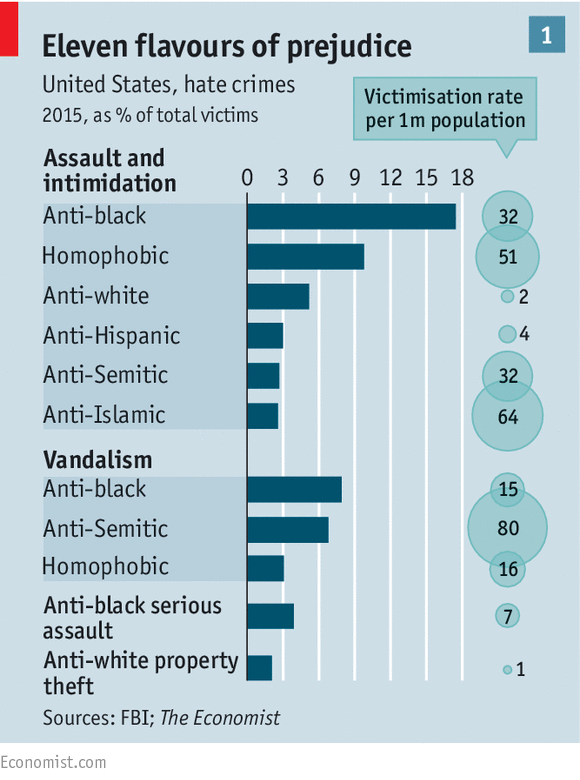
In Flint, Michigan, for example, the citizens have no form of clean water as the water there is contaminated by lead and other toxins. From 2014 to the present (and the foreseeable future), the problem has continued and has no signs of being truly addressed. America, known as ‘the mixing pot,’ (the Chapel Hill shooting, resulting in the deaths of three Muslim students, is only one out of the many hate crimes that take place in America) and ‘the land of the free,’(The American prison industry is the new legal form of slavery- inmates toil long hours without proper food or water to produce cheap labor for the masses) continues to carry out actions that only prove how Nation Branding allows the populous to ignore the very nature of what the Brands condone to occur.

Many outsiders to the US acknowledge and criticize the flaws of this country while at the same time ignoring their own ones. To be seen as a fair country to all and achieve ‘maximum aesthetics’ status, the US simply has to begin admitting their own flaws and work to fix the injustices occurring throughout the country.

Question: How does the branding of smaller regions, or states, effect the overall branding of a country such as the US?


Sources:


Week 2: 

South Korea is a country that has been remolded from a ‘nothing country’ that was just lumped together with North Korea, to a booming cultural destination.  Known for k-pop and barbecue, the country is acknowledged for the positive aspects it provides. In my opinion, the factor in the National Aesthetic model that has the most influence over South Korea’s development is industry.

The industry is what dictates that the steps to success are to follow the methods that Western countries employ to move forwards. Countries such as Japan and America are major points of interest to the South Korean industries. They view Western culture as an opportunity to capitalize on Western ideas. With Western culture being imitated, it’s only natural that other countries such as South Korea well seek to emulate the ‘Western look.’ Surgery to remove monolids have become increasingly popular and many South Koreans seek to change their look to match a more ‘k-pop-centric’ attitude. This appeal of ‘wanting to look white’ is an unhealthy and Eurocentric demand that’s only been rising with the influence that industries have over it.

South Korea can achieve maximum ‘aesthetic status’ by achieving something that is so uniquely original that other countries will want to emulate it.

Question: What would have happened if South Korea had based their National Branding off of more Eastern values than Western ones?

Image result for south korea  surgery graph

Sources:


Kenrick Chiang: Week 1 & 2

Week 1:
Nation Branding is an idea in which carries a heavy impact on a specific nation. It allows different nations to get on the map due to a specific trait they may possess. Nation Branding can be powerful in the sense that it holds the opinions of many people. Nation Branding can give a country a good name such as the United States. Many outside countries see the United States as a land of opportunity and freedom which is something other countries do not have. This leads to people wanting to travel to the United States and have a life there. Because of having a good name, it can help countries greatly as more people become interested about the country, leading to more travel and eventually contributing to the economy. However, Nation Branding can give countries a bad name as well. A common example is Ireland. Many people associate the Irish with being drunk or violent to each other. This wards off potential tourists, but it can also encourage many people to try the many drinks in Ireland. Due to this nation branding, a pitfall can be seen in the sense that it creates negative stereotyping and/or racism. We see it a lot today in the news, conversations, movies, etc. A common example is China for its pollution and factories. Many people are eventually against the idea of the mass pollution that affects the lives of its citizens. Personally, due to the constant media coverage of different countries, we all subconsciously nation brand different nations. People in the United States even do it to other states such as California being the surfers and how everyone knows a celebrity or Texas being the land of cowboys and guns. So by having a “brand,” countries are able to benefit or fall from these brands that people give them.
Question: We have seen countries start from little, rise due to branding, but is there an example where a nation has fallen due to this?
Source: https://img.buzzfeed.com/buzzfeed-static/static/2014-04/enhanced/webdr08/25/9/original-28973-1398433674-13.jpg?downsize=715:*&output-format=auto&output-quality=auto

Week 2:
Personally, I feel like South Korea’s National Branding has a big part of South Korea’s National Aesthetic. Since the split between North and South Korea, we have seen the United States help South Korea rebuild and shaped to have more of a western influence on the country. We see this in its most notable brands such as plastic surgery and pop culture. In Jeongsuk Joo’s article, Joo brings up the notion of the Korean Wave. This is when Korea makes social changes for a few years and is essentially dubbed “a new center of cultural production in Asia” (Joo 490). This essentially states that South Korea’s National Aesthetic is its own pop culture. By revamping the country within a few years, South Korea was able to give itself a brand. Now, we can see South Korea's pop culture influencing many different countries and people across the world. Whether it is through their pop-stars or drama shows, South Korea was able to captivate the interest of many people which then helped make its mark on the map. By marking itself in the world, it gives them some sort of identity that will be carried on until the next major change in its aesthetic.
Question: How drastic of a change would it be if a different country helped out South Korea instead of the USA such as Japan or England?
http://image.kpopstarz.com/data/images/full/472717/gaon-combined-jpg.jpg?w=650

Bin Xiao Week1&2

                                                      Korean popular culture

For an extended period, Korea has never relished regional and international acclaim for its popular culture. Nevertheless, there has been an aura of fear imposed by cultural globalization and Korea continue to feel threatened by Japanese and American culture. However, in the recent past, the popular culture in the nation has started to receive transnational recognition, and at the same time establishing a point of national pride (Lee, 2012). Despite the impact of foreign cultures and reception of globalization in Korea, the nation has magnificently reinvented itself in the recent past, and its culture has started to spread across Asia. The Korean culture is slowly re-establishing itself, and it has been termed as the coolest brand in the world.
In the early 1990s, the Korean popular culture was shunned by its people at the domestic level, and it was never heard of in the international arena.  The Korean film industry stagnated since Hollywood films had taken over in the country. However, in the late 1990s, the situation reversed, and the popularity of the Korean pop culture started to increase. For instance, about 60% of the domestic music market in Korea was dominated by the local Korean pop music (Lee, 1999). Also, the Korean films with local themes penetrated in the market as the market share skyrocketed from 25-39.7% (Joo, 2011). Surprisingly, Korea became a nation with a vibrant film industry as it dominated the position of the Hollywood motion pictures in the local market. 
                There was a time when South Korea was poor and war-torn, but it succeeded in re-establishing itself by enhancing the export of its popular culture particularly TV shows and music.  The nation took time to build the Korean culture which is said to have an influence in most regions in the world. The nation reaped from its effort to promote the popular culture and transform into an economic and cultural powerhouse. The country continues to create the demand for their popular culture to ensure a constant supply that will ensure that their influence is felt across borders (Kaneva, 2011). Korea has become the leading exporter of the popular culture across the universe.  For instance, the Girl’s generation (visual below) is a well-recognized nine-member South Korea girl group that was molded in 2007, and has went ahead to sell more than 100,000 copies of each of their songs (Jin, 2012).

In my opinion, Korea can proceed further and achieve maximum national aesthetics culture. For example, the government can partner with its citizens to conduct food festivals that will promote Korean food to locals and foreigners (Jang & Paik, 2012). Nevertheless, Korea can launch a travel fair that will appeal to the public and encourage them to tour the nation to witness and enjoy the exciting culture and splendid natural landscapes.


References
Jang, G., & Paik, W. K. (2012). Korean Wave as tool for Korea’s new cultural diplomacy. Advances in Applied Sociology, 2(03), 196.
Jin, D. Y. (2012). Hallyu 2.0: The New Korean Wave in the Creative Industry. Retrieved from https://quod.lib.umich.edu/i/iij/11645653.0002.102/--hallyu-20-the-new-korean-wave-in-the-creative-industry?rgn=main;view=fulltext
Joo, J. (2011). Transnationalization of Korean popular culture and the rise of “Pop Nationalism” in Korea. The journal of popular culture, 44(3), 489-504.
Kaneva, N. (2011). Nation branding: Toward an agenda for critical research. International journal of communication, 5, 25.
Lee, J. S. (2002). The Korean language in America: The role of cultural identity in heritage language learning. Language culture and curriculum, 15(2), 117-133.

Lee, Z. N. (1999). Korean culture and sense of shame. Transcultural psychiatry, 36(2), 181-194.

Nancy Bui | Week 1 & Week 2

Week 1:
National Branding as quoted consist of “a compendium of discourses and practice aimed at reconstituted nationhood through marketing and branding paradigms.” Through the use of effective national branding, nations can reassert their existing identity to the world, or completely transform it. As mentioned in class, France did not have the best image, nor did they actually really have one. But as the reformatted and re-invested the allocation of their efforts and resources, they flourish as one of the most visited countries in the world. National branding works to perpetuate positive traits/benefits of differing nations/countries, which inadvertently adds to their value economically, culturally, and politically (power). Some potential pitfalls of national branding is receiving negatives views and not having the appropriate support and resources given to change it. So in particular, it’d be especially difficult for countries who have not developed or modernized to attempt to national re-brand. They may not have the support of the government or community in which that are aligned with the overall goal.


Week 2

Out of the factors contingent of the national aesthetic of South Korea, the people hold the most of development. As a western U.S citizen, my national branding of them pertains around korean drama, skin care, and famous barbeque. The portrayal of what the U.S understands from South Korea, has been set by the people. As denoted earlier, the popularization of South Korea entertainment has exploded and brought tourism and other revenues of profit for this folks and their companies. South Korean influence has imprinted and become embedded in Western culture, such as the restaurants filled with korean barbeque in K-town in LA, korean skincare products selling at top notch stores such as Sephora, and Korean stars collaboration with the U.S music entertainers.